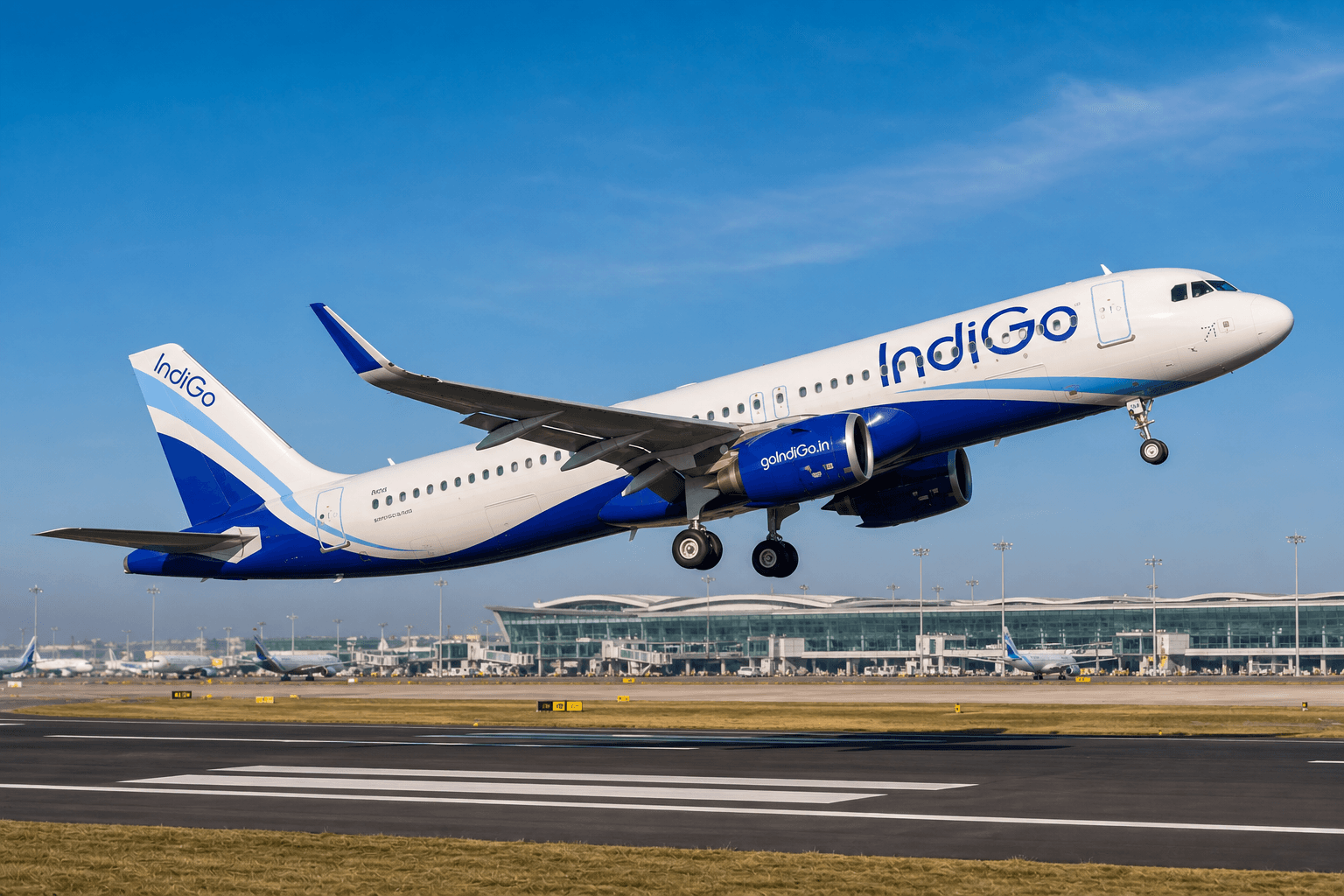
The Start Of A Different Airline
IndiGo began flying in 2006, at a time when India's aviation market was opening up but still uneven. Flying was becoming more accessible, yet many travellers still saw air travel as expensive, unpredictable and complicated. IndiGo entered with a clear promise: keep the product simple, run flights on time, price tickets competitively and use a disciplined operating model.
The airline was promoted by InterGlobe Enterprises and Rakesh Gangwal, with Rahul Bhatia and Gangwal becoming closely associated with the airline's early growth. Its first commercial service, launched on August 4, 2006, connected Delhi and Imphal via Guwahati. That first flight was modest compared with the network IndiGo runs today, but it carried the shape of the business that followed: high aircraft utilisation, short turnarounds and an insistence on operational consistency.
Low-Cost Discipline And Rapid Growth
IndiGo's rise was powered by focus. Instead of trying to be everything to everyone, the airline leaned into a low-cost, single-class model. It operated a young fleet, avoided unnecessary complexity and made punctuality a central part of the brand. For passengers, that meant a practical proposition: get from one city to another on time, usually at a competitive fare, with fewer surprises.
The strategy worked particularly well in India, where business travellers, students, families and first-time flyers all wanted reliable domestic connections. As more Indians moved between metros and emerging cities, IndiGo added frequencies on dense routes and expanded into new destinations. By 2011, it had become India's largest airline by domestic market share, a striking achievement for a carrier that was only five years old.
International Ambition
IndiGo's international growth was initially measured and close to home. Short-haul international flights to markets such as Dubai, Bangkok, Singapore, Kathmandu and other regional points matched the airline's narrow-body fleet and cost structure. These routes gave Indian travellers more affordable options for leisure, work and family travel, while still keeping IndiGo's operation relatively simple.
Over time, the international map became more ambitious. IndiGo began looking beyond the idea of being only a domestic giant. With new aircraft technology, codeshares and network partnerships, the airline could connect Indian cities to more global points while still using a model built around efficiency. Its international expansion is now one of the most closely watched parts of Indian aviation.
Fleet Orders That Signalled Scale
IndiGo's aircraft orders are a major part of its story. The airline repeatedly used large Airbus orders to secure future capacity, maintain a young fleet and support network growth. Its 2023 order for 500 Airbus A320neo family aircraft became one of the largest aircraft orders ever placed by an airline, underlining how much IndiGo expects Indian aviation demand to grow.
Fleet scale gives IndiGo flexibility. It can add frequency on trunk routes, open thinner city pairs, replace older aircraft and plan expansion years ahead. For travellers, the fleet story shows up in more choices: early morning business flights, late evening returns, non-stop links to smaller cities and more fare competition.
Why IndiGo Matters
IndiGo matters because it helped normalise flying in India. Its growth coincided with the rise of online booking, fare comparison, weekend breaks, startup travel and expanding middle-class mobility. For many travellers, the first airline they flew repeatedly was IndiGo. The brand became familiar not because it was luxurious, but because it was available, predictable and usually affordable.
The next phase will test different strengths: international expansion, premium add-ons, loyalty economics, airport congestion, sustainability and competition from other Indian carriers. Yet the core IndiGo story remains simple and powerful: a focused airline used discipline and scale to become the carrier that moves a large part of India.