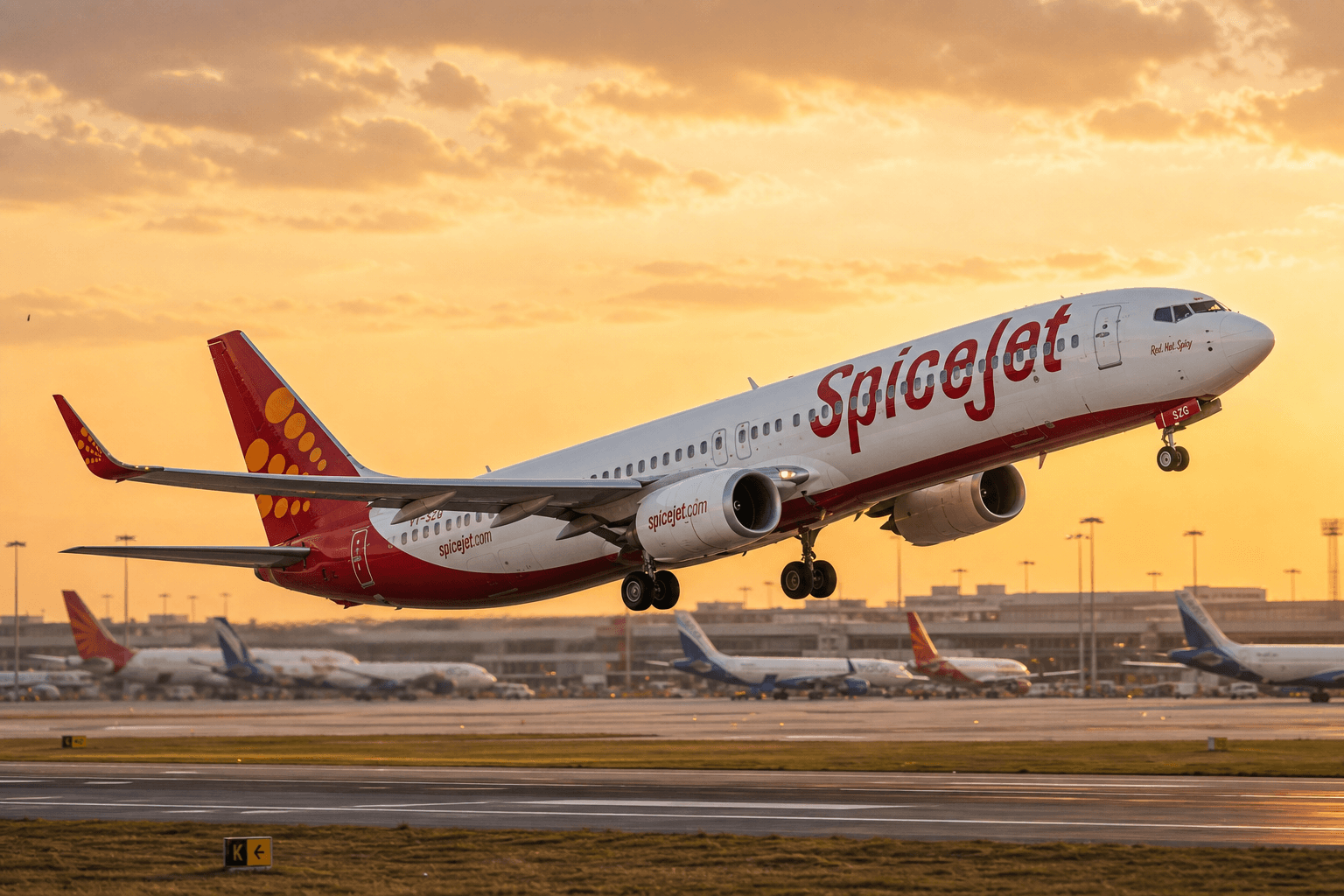
A Budget Airline Takes Off
SpiceJet commenced commercial flights in 2005, entering India's newly liberalising aviation market with a low-cost, no-frills model. It grew quickly on the back of demand from price-sensitive domestic travellers, becoming one of India's top airlines by market share within a few years.
The airline built its early identity around simple fares and a young Boeing 737 fleet, competing directly with other new-generation low-cost carriers that launched in the same period.
Turbulence And Turnaround
Like much of the Indian aviation sector, SpiceJet has been through significant financial turbulence, including periods of grounded aircraft and restructuring. In 2015, Ajay Singh — one of the airline's original founders — reacquired control in a turnaround deal aimed at stabilising operations.
Since then, the airline has gone through cycles of fleet reduction and rebuilding, working through financial restructuring while continuing to operate a meaningful share of India's domestic network.
Regional Connectivity Focus
Alongside its Boeing 737 fleet, SpiceJet has operated Bombardier Q400 turboprops, giving it reach into smaller regional airports that larger jets can't efficiently serve. This made the airline a regular participant in the government's UDAN regional connectivity scheme.
That regional focus remains part of SpiceJet's identity — connecting smaller Indian cities to bigger metros, alongside its core network of domestic trunk routes and a handful of international destinations.